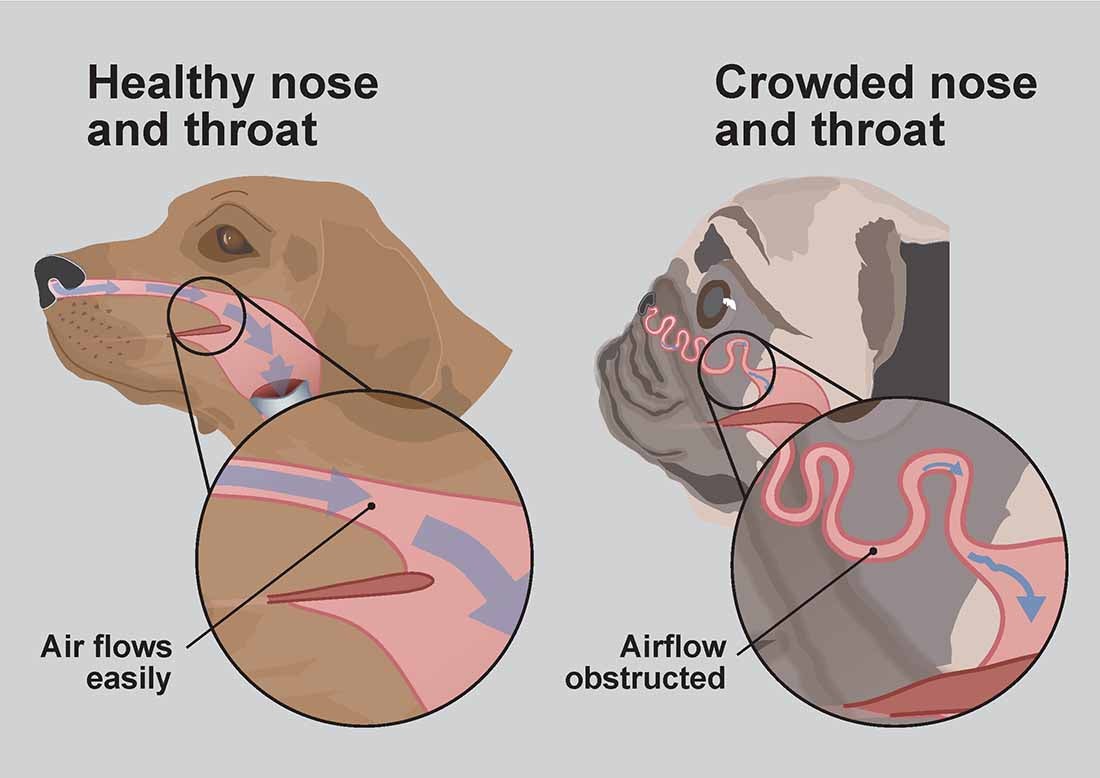
Many of our most beloved breeds, including French Bulldogs, Pugs, Boston Terriers, and English Bulldogs, have short, "smoosh-nosed" faces that make them adorable. Unfortunately, these same features can create serious breathing problems. This condition is called Brachycephalic Obstructive Airway Syndrome, or BOAS for short.
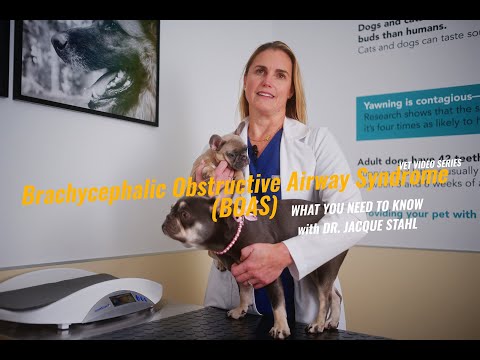
At Town and Country Animal Hospital, we see how life-changing surgery can be for dogs suffering from this condition. Dr. Jacque Stahl explains what BOAS is, the symptoms to look for, and how corrective surgery can help these pets breathe and live more comfortably.
What Is Brachycephalic Obstructive Airway Syndrome?
Brachycephalic Obstructive Airway Syndrome is a group of anatomical abnormalities that restrict airflow in dogs with shortened skulls. These issues occur in the nose and the back of the throat and make it difficult for affected dogs to pull in enough air, especially during activity or warm weather.
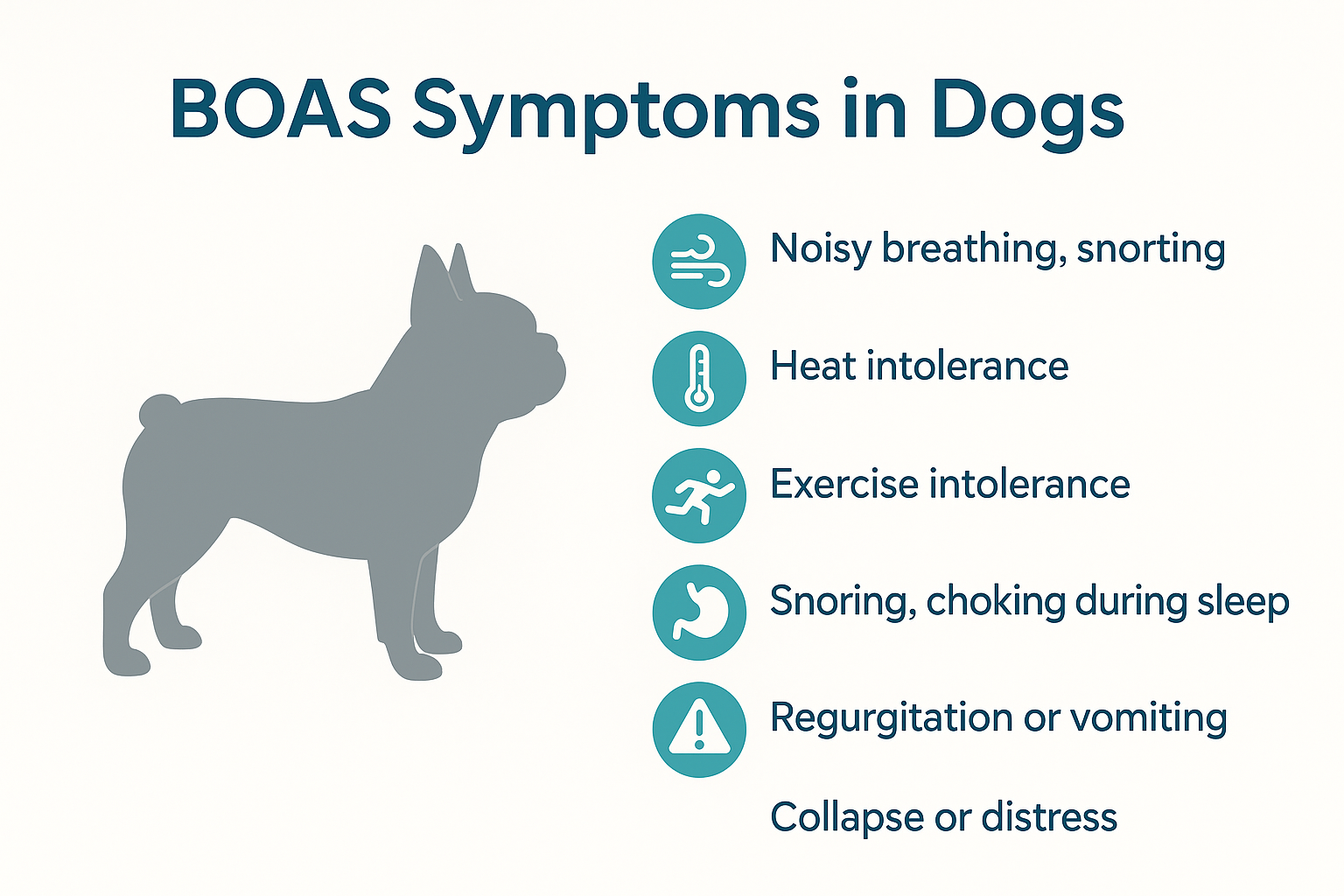
Common symptoms include:
- Snoring or loud breathing
- Snorting and wheezing
- Vomiting or regurgitation
- Exercise intolerance
- Heat sensitivity
- Collapse in severe cases
If your dog struggles to catch their breath during walks, pants heavily with minimal activity, or snores loudly every night, it may be time for an evaluation.
The Four Main Components of BOAS
BOAS usually involves several anatomical issues working together:
1. Stenotic Nares
The nostrils are narrow, which limits airflow through the nose.
2. Elongated Soft Palate
The soft palate is too long and extends into the airway, obstructing airflow and vibrating during breathing.
3. Everted Laryngeal Saccules
Small pockets of tissue inside the larynx are pulled inward as the dog struggles to breathe.
4. Enlarged Tonsils
The tonsils can become swollen and protrude into the airway, adding further obstruction.
Combined, these issues make it extremely difficult for affected dogs to breathe comfortably, especially when they are excited, exercising, or overheated.
Why BOAS Surgery Helps
For dogs with moderate to severe symptoms, surgery can be truly life-changing. Dr. Stahl explains that BOAS surgery typically includes:
- Widening the nostrils by removing obstructive tissue
- Trimming the elongated soft palate
- Removing everted laryngeal saccules
- Removing enlarged tonsils when necessary
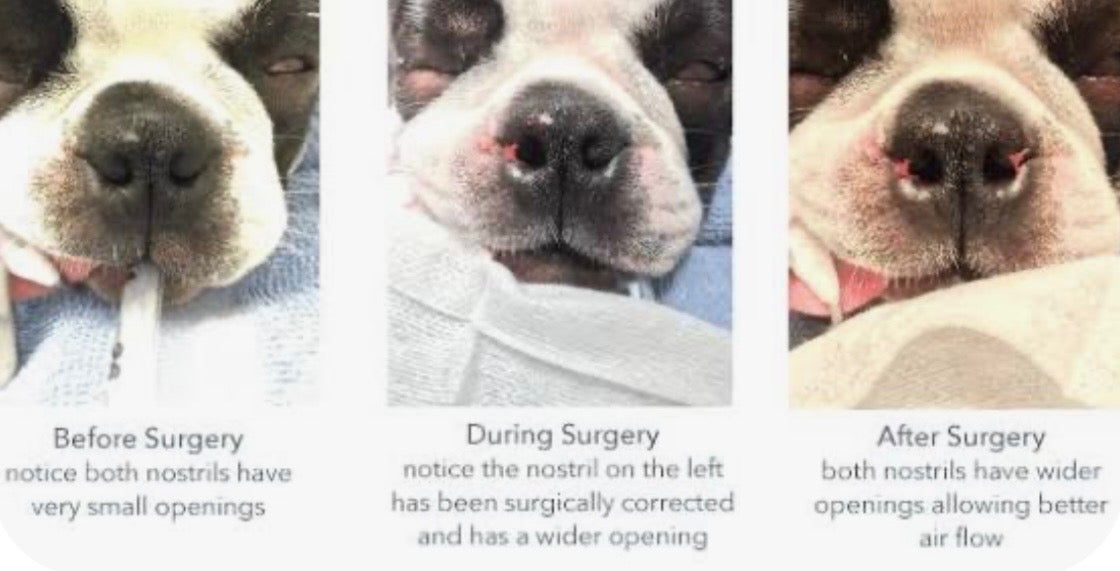
These corrections open the airway and significantly improve airflow. Many dogs experience improvement immediately, often breathing quietly for the first time in their lives.
Dr. Stahl performed BOAS surgery on her own French Bulldog during her spay. Before surgery, her dog snored loudly, overheated easily, and struggled on walks. After recovery, she breathed comfortably, had more energy, and happily joined longer walks without difficulty.
What to Expect After BOAS Surgery
Most dogs go home the same day with medications that reduce inflammation, manage pain, and prevent nausea. Soft food and a small amount of ice cream are often part of the recovery plan to soothe the throat. Mild nasal swelling and discharge during the first one to two weeks are normal.
Families usually notice a significant improvement right away. Dogs breathe more quietly, sleep more comfortably, and regain energy they never had before.
Does My Dog Need BOAS Surgery?
If your brachycephalic dog cannot exercise like other pets, overheats easily, or snores constantly, these are not simply breed quirks. They are signs of airway obstruction caused by BOAS. A simple examination can help determine whether surgery is right for your pet.
At Town and Country Animal Hospital, our goal is to help every pet breathe, play, sleep, and live comfortably. No dog should struggle for every breath.
Schedule a Consultation
Town and Country Animal Hospital
9836 Fairfax Blvd, Fairfax, VA 22030
(703) 273-2110
Our team is here to help your brachycephalic pet live a happier and more active life.