
Monster is a 15 year old Havanese. He has 400 hours as a therapy dog in a hospital chemo ward, and he has spent his whole life knowing exactly what his owner Carolyn wanted from him. Then he started pacing at night, staring at nothing, and walking the other way when she called his name.
She sat down with Dr. Matt Novarr at our sister hospital in Annandale, who worked through the questions we ask any Fairfax family whose older dog has started acting different.
Book a Fear Free AppointmentCall or text (703) 273-2110
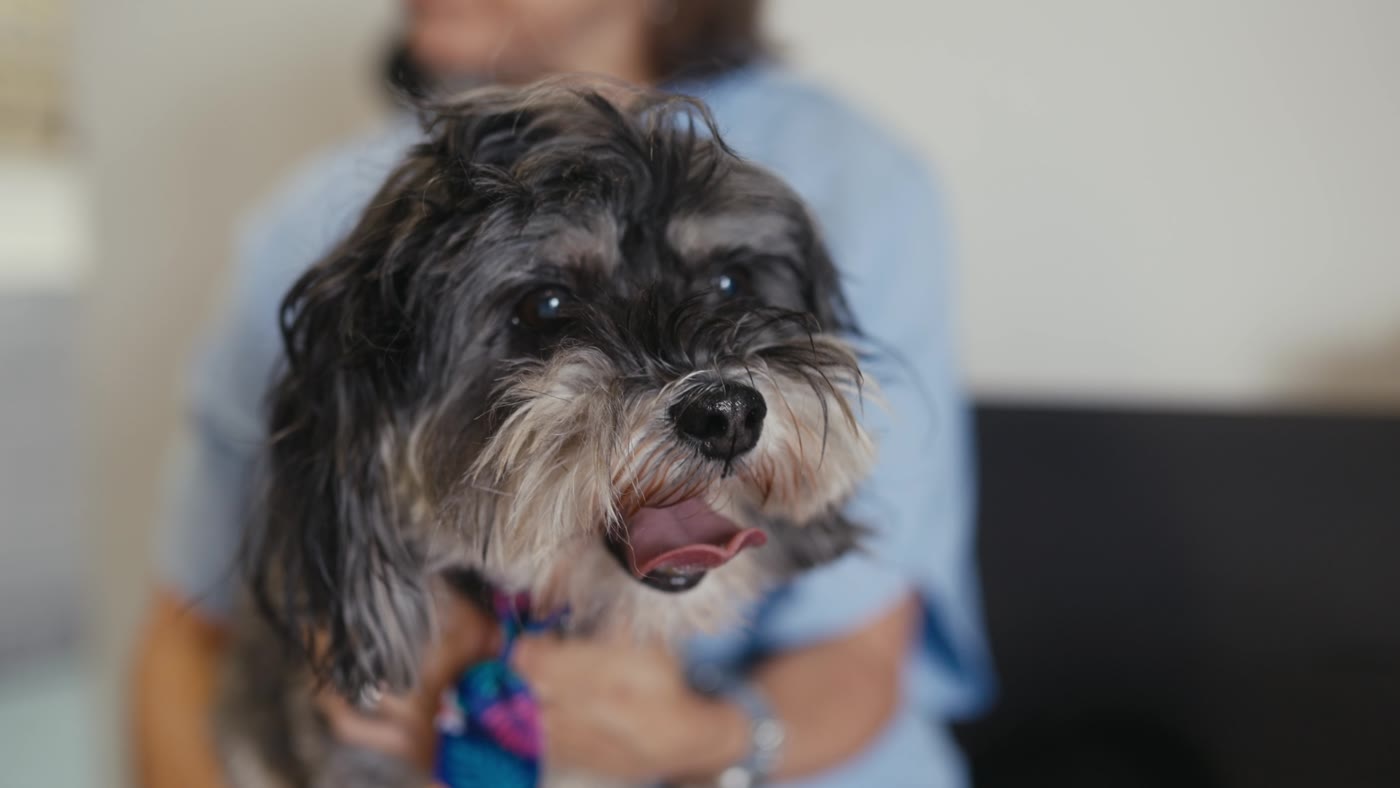 Monster, 15, has 400 hours as a therapy dog.
What changes should you actually pay attention to?
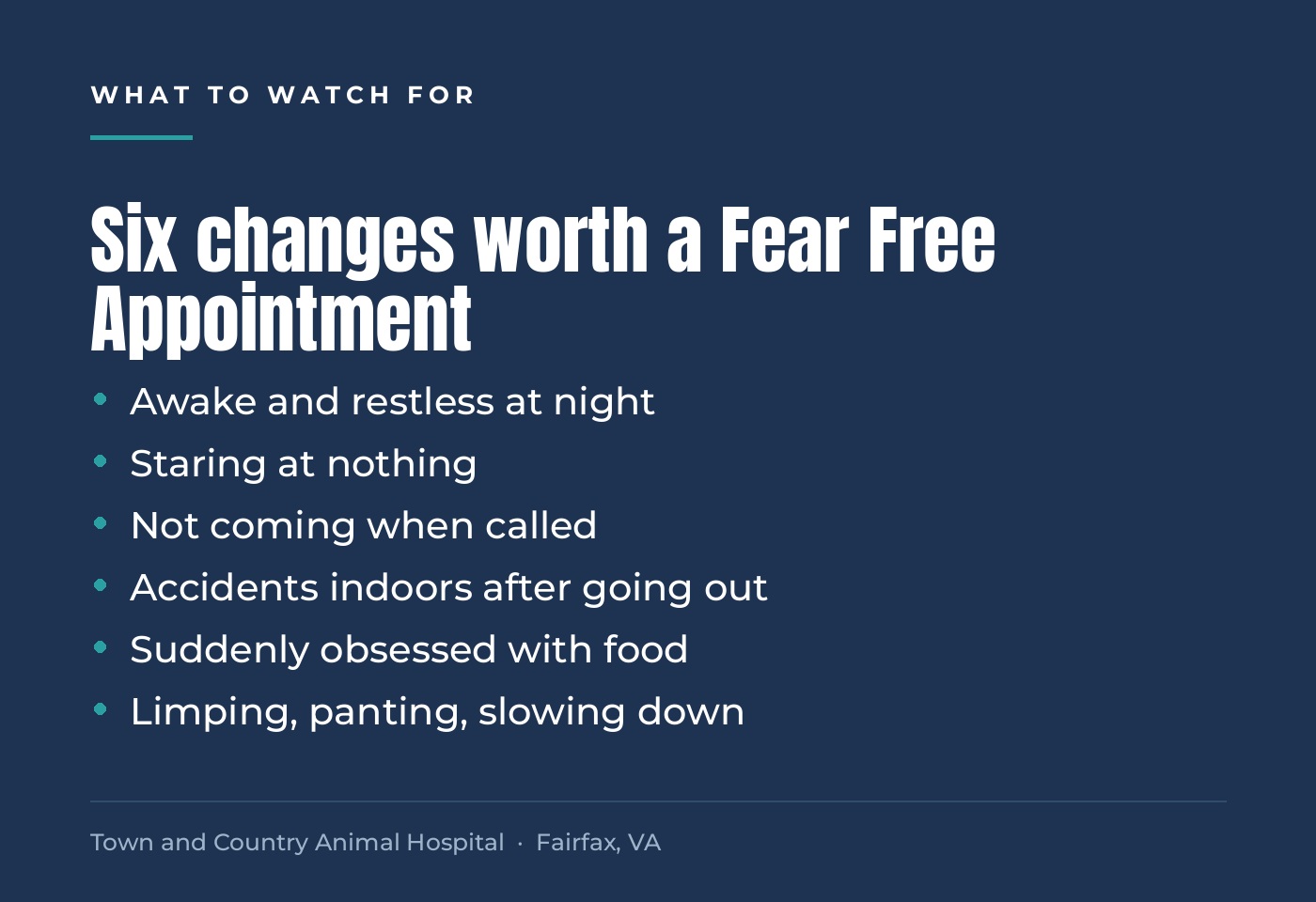
The ones Carolyn described are the classic set. Monster stopped sleeping through the night. He started begging for treats when he had never been food motivated in his life. He seemed disoriented, and he would go outside, come back in, and then have a bowel movement in the house. Alongside that he was limping badly, he had new growths, and he was panting more than usual.
Write down what you are seeing before your Fear Free Appointment, and get a phone video if you can catch the behavior. A week of pattern tells us more than any one incident.
Could your dog be losing his hearing?
This is the one pet parents almost never suspect. A dog who stops coming when called reads as stubborn, or just old. Often he simply cannot hear you.
We do not do formal hearing testing in a routine exam. The practical version is a snap of the fingers near the dog. Most dogs at least glance over. Monster did not.
Dr. Novarr has been on the owner's side of this. His own dog, Doty, started eating things in the yard late in life, and he spent months calling her name across the grass before he realized she had gone deaf. A drop in hearing or sight changes how a dog reads the world, and that shows up as behavior.
Is this a behavior problem or a medical one?
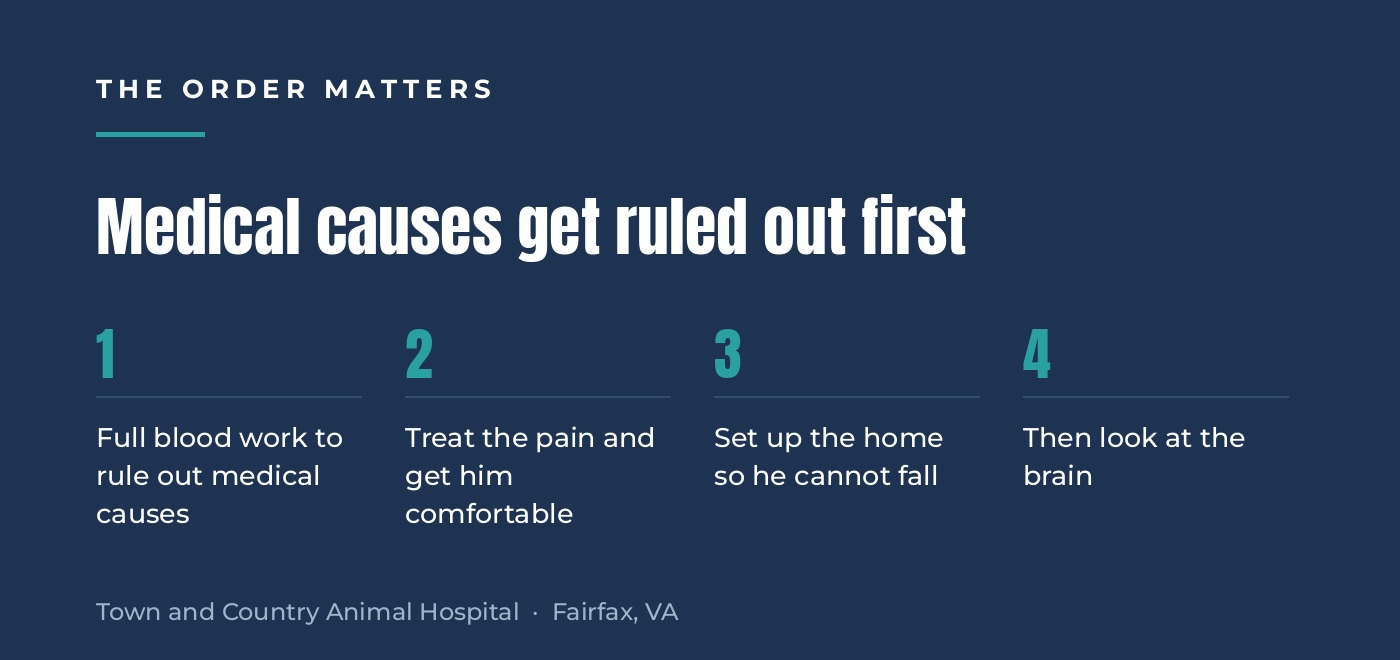
Usually it is both, and that is exactly why the order matters.
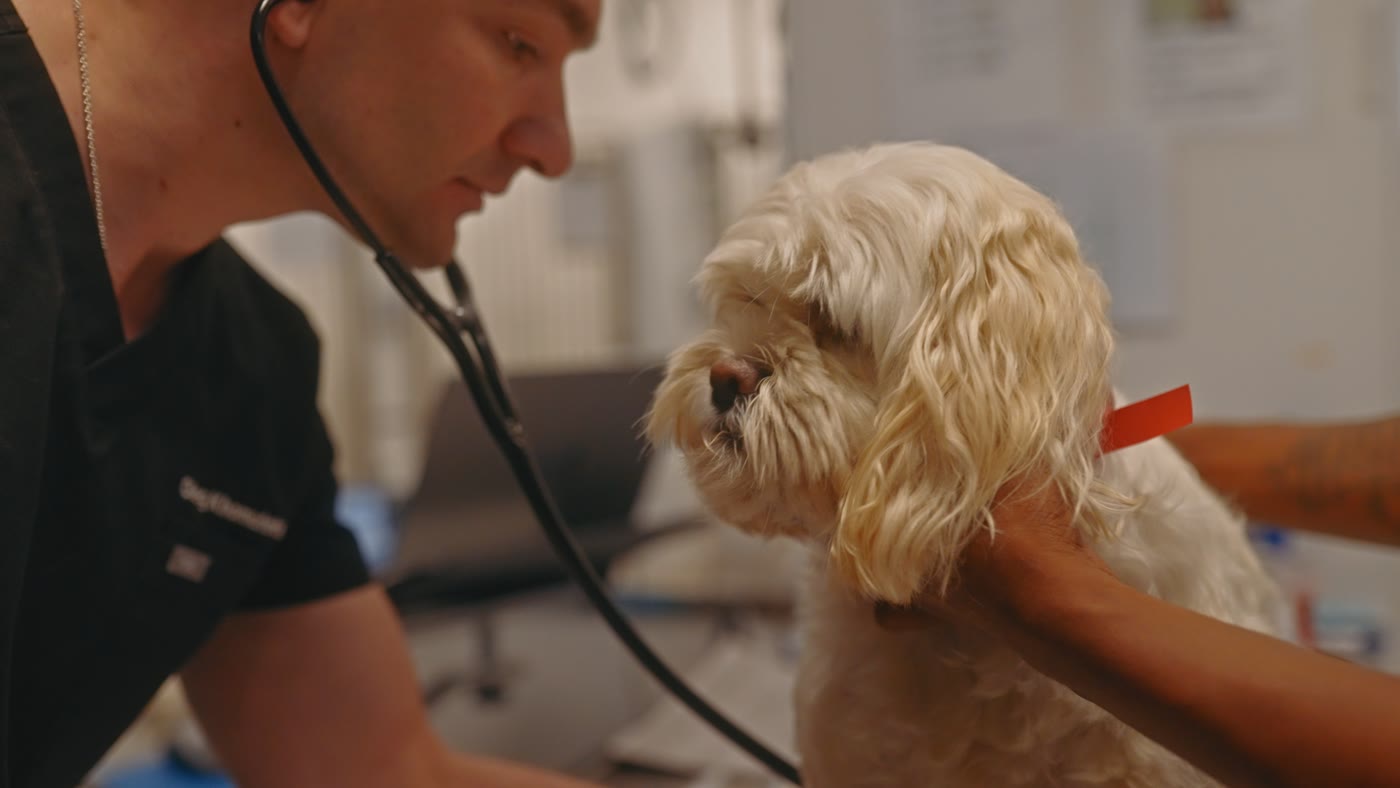
Monster has an arthritis flare in his right shoulder, so he is uncomfortable. His increased appetite and panting can point at a metabolic problem. He also has the nighttime restlessness and the disorientation, and any one of those could be producing the others. Pain keeps a dog awake. Metabolic disease drives appetite. Deafness looks like disobedience. Untangling them is the work.
What does a senior workup actually involve?
Full blood work comes first, to rule out the medical causes that can produce every one of those signs on their own. Then comfort: treating the arthritis and resting him through a flare so the joint gets a real chance to settle.
The house matters too. Setting up the home so an unsteady dog cannot fall prevents the injuries that make everything else worse.
An older dog who hurts is also an older dog who is anxious about being handled. Every appointment here is a Fear Free Appointment, which is not a nicety on a senior workup. A calmer dog gives us a more honest picture.
What is canine cognitive dysfunction?
Dr. Novarr describes it as aging changes in the brain, roughly the equivalent of Alzheimer's for dogs. The restlessness at night, the eliminating indoors, the staring off, the getting lost in a familiar house: those are its signs.
There is no cure, but there are real things a veterinarian can do to support an aging brain and reduce the signs, and they work better the earlier they start.
This takes communication and a lot of rule outs, one step at a time. Our senior dog care page covers what changes and when, and Dr. Nancy Barnett walks through the signs of aging in her own series.
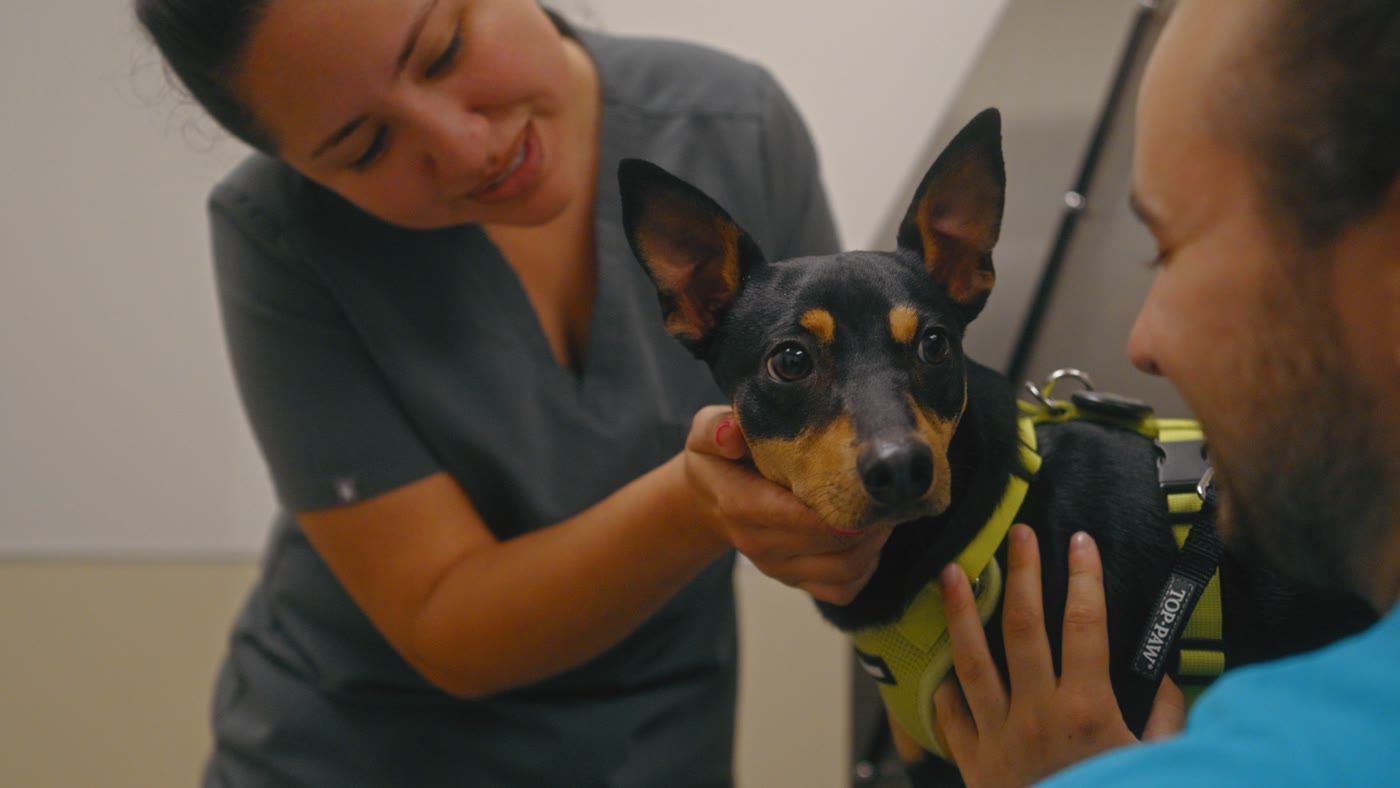 Every team member here is individually Fear Free Certified.
|
After hours If something changes suddenly overnight, our sister hospital Columbia Pike Animal Hospital and Emergency Center in Annandale is open 24 hours a day, every day, with no additional emergency fee. Save this number in your phone tonight. |
Frequently Asked Questions
At what age is a dog considered senior?
Most dogs are considered senior around seven, and small breeds often later. Age matters less than change. If something about your dog is different from six months ago, that is the reason to come in.
Is it worth investigating this in a dog who is 15?
Yes. Carolyn's goal is the right one: she wants his end of life to be as comfortable as possible. Finding a treatable cause for pain or restlessness gives an older dog better days, however many are left.
Can canine cognitive dysfunction be cured?
No. Supportive care can ease the signs and improve daily life. Getting the diagnosis right first matters, because pain and metabolic disease look similar from across the room and both are treatable.
Does a nervous senior dog do alright here?
Yes. Every member of our team is individually Fear Free Certified, and older dogs are exactly who that training is for. We work at the pace your dog can handle.
When should you book a Fear Free Appointment?
If your older dog has started doing something new, that is worth a Fear Free Appointment rather than a wait and see. Most of what looks like old age has a name, and many of those names have a treatment.
Book a Fear Free Appointment online at townandcountryanimalh.com/schedule-appointment, or call or text us at (703) 273-2110.