
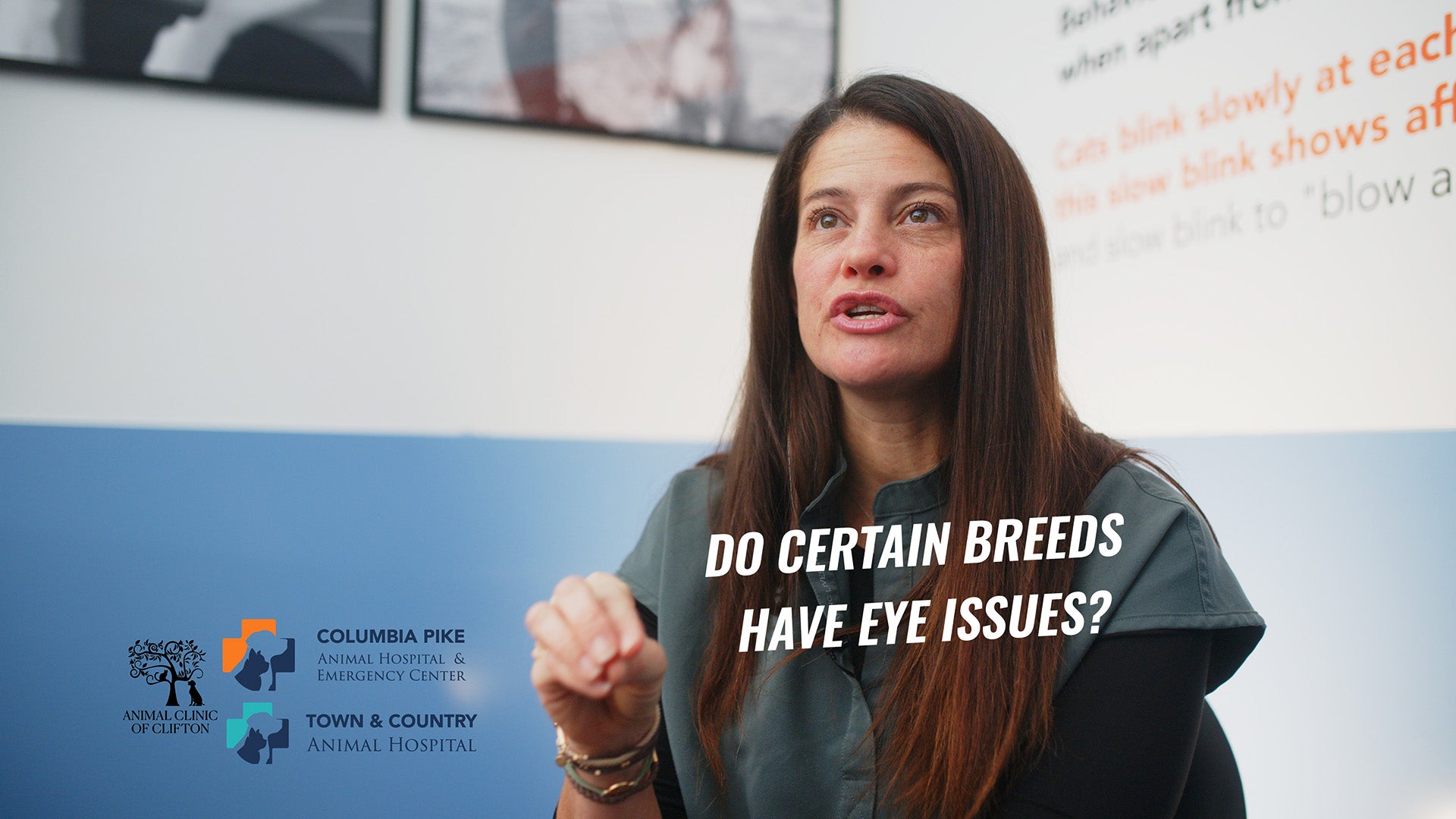
Your dog's eyes are incredibly sensitive, and even small issues can quickly become serious. At Town and Country Animal Hospital, we want pet owners to feel confident knowing what to look for and when to take action.
In this week's Vet Video Series, Dr. Delia Large-Hart shares how to recognize eye problems early and why prompt care matters.
Recognizing the Signs of Eye Problems
Catching eye issues early can make all the difference.
Watch for:
- Discharge from the eyes
- Clear discharge may be normal (epiphora)
- Green or yellow discharge is more likely infection
- Squinting or excessive blinking
- Redness or swelling
- Pawing or scratching at the eye
These symptoms can indicate irritation, infection, or injury and should always be taken seriously.
Common Eye Conditions in Dogs
Some of the most common eye issues we see include:
- Eye infections, often caused by bacteria like staph, strep, or pseudomonas
- Corneal abrasions or ulcers, from scratches or debris
- Foreign material in the eye, such as dirt or grass seeds
More serious conditions, like proptosis (eye displacement), can occur and require immediate care.
Why Eye Issues Should Never Be Ignored
One of the most important takeaways:
There is no such thing as a minor eye issue.
Because the eye is so delicate, problems can worsen quickly. Early treatment can prevent pain, complications, and even vision loss.
If something looks off, it's always best to have your dog evaluated right away.
Breed-Specific Eye Risks
Certain breeds are more prone to specific eye conditions:
- Short-nosed (brachycephalic) breeds
More likely to develop dry eye and ulcers - Some working and shepherd breeds
May develop pannus - Jack Russell Terriers
More prone to lens luxation due to genetics
While breed tendencies can guide us, every dog is evaluated individually to ensure the right diagnosis and treatment plan.
How We Evaluate Your Dog's Eyes
During an exam, we perform simple, effective tests to assess vision and eye health:
- Menace response to check visual awareness
- Pupillary light reflex (PLR) to evaluate nerve function
- Dazzle reflex to assess response to light
These tests help us determine how well your dog can see and guide next steps for treatment.
Treatment: Why Acting Early Matters
Eye conditions are treated based on the underlying issue, but one principle always applies:
Early and proactive treatment leads to better outcomes.
Treatment may include:
- Antibiotic eye medications
- Anti-inflammatory therapies
- Supportive treatments to promote healing
In more advanced cases, referral to a veterinary ophthalmologist may be recommended.
When a Specialist Is Needed
Veterinary ophthalmologists are essential for:
- Cataract surgery
- Complex or non-healing conditions
- Advanced eye procedures
However, starting with your primary veterinarian is the best first step. We can evaluate, begin treatment, and guide you if a referral is needed.
Eye Care at Home
There are simple steps you can take to help protect your dog's eyes:
- Rinse eyes after outdoor activities, especially in fields or wooded areas
- Use a gentle eye wash if debris is present
- Avoid rubbing or applying pressure to the eye
Consistent care at home can help prevent irritation and catch problems early.
A Quick Reminder About Medications
Not all pet medications are interchangeable.
Some medications that are safe for dogs can be dangerous for cats. Always check with your veterinarian before using any medication at home.
We're Here to Help
If your dog is showing any signs of an eye issue, don't wait.
Town and Country Animal Hospital
9836 Fairfax Blvd, Fairfax, VA 22030
(703) 273-2110
And if something urgent comes up, you have access to 24/7 emergency care at our sister hospital:
Columbia Pike Animal Hospital and Emergency Center
4205 Evergreen Lane, Annandale, VA 22003
(703) 256-8414
Open 24/7, no additional emergency fees
Love People. Love Pets.